


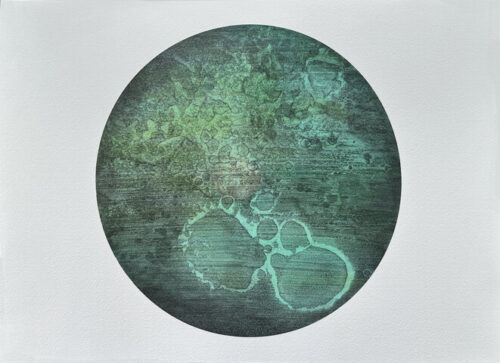
Katja Davar
“Psychoanalysis, originally a revolutionary theory of sex and of the psychology of the unconscious, began to adapt itself, insofar as the theory of sex was concerned, to the authoritarian conditions of existence, thus becoming acceptable to a reactionary society.”
Wilhelm Reich (introduction to The Invasion of Compulsive Sex-Morality)
“The portrait serves to preserve the physical likeness of the person for the afterlife. In Egypt, the entire body is preserved for the other world by embalming it, and the mummy, in turn, carries a panel portrait of the person, which is placed on top of the face.”
Hans Belting (Likeness and Presence: A History of the Image before the Era of Art )
“Night terrors afflict children one to two years old. The child wakes up from it trembling and drenched in sweat. What causes the terror? What has he or she seen?”
Yi-Fu Tuan (Landscapes of Fear)
There is a quote of Gramsci that has become remarkably popular. I see it almost every week in someone’s post or podcast. And it is from The Prison Notebooks (in English). The quote is: “The crisis consists precisely in the fact that the old is dying and the new cannot be born; in this interregnum a great variety of morbid symptoms appear.” It is, interestingly, often misquoted as ‘the time of monsters’ and not morbid symptoms. I have no idea the reason for this, but I guess the cartoon flavour of ‘monsters’ appeals to people today. But there is a good reason for the popularity of this idea that Gramsci expresses. The culture of the West is witness to the degrading of nearly everything to do with their daily life. They are also aware of how a sense of doom seems to have descended on western society. Trump himself is a stand-in for morbid symptom. Trump is indeed more symptom than anything else. He is the allegory for the failures of what, in theory anyway, began with the Enlightenment.
And it is easy to just chalk up the current malaise as a Trump and MAGA phenomenon. It is much more than that. I wrote last post about the ‘uncanny’ in the context of the rise of an internet movement concerned with ‘liminal’ space. Mostly in photography. One aspect of that I did not mention was that in an age when AI is being marketed so aggressively, a return to the simple photograph feels somehow authentic. The ideas associated with the liminal also feel acutely relevant to life in 21st America. In the West in general, probably, but for certain in the United States. Spaces without humans, without perhaps humanity. Spaces without clear purpose and in some cases with clearly no purpose.
I also feel several avenues of thought, of theory even, and of emotional purchase, that feel a part of the reactive angst that I am trying to describe. A new Puritanism, for one. In an age, now, of Epstein files narratives and of nearly impossible numbers of people involved in child sexual abuse and pornography, that there would be a reaction. And the U.S. is never that far away from its Puritan roots. I feel that in the U.S. the lynch mob, literal perhaps, but certainly symbolic and metaphoric, is also not a big leap for the society. This new digital lynch mob grows daily and for myriad issues. It was not that long ago that Americans had lynching parties, almost exclusively of black people, and sold postcards, and took their children. Lynchings as akin to a family picnic.

Robin F. Williams
The collective knows that the old is dying. The old dreams. The old promises are broken. The sheer amount of money transferred to the top 1% is nearly incomprehensible. Musk, it is now claimed, is a trillionaire. This is meaningless in the same way it is meaningless to say the sun will die in 500 billion years. When money is calculated in trillions of dollars it becomes an allegory — and a myth. One human being cannot ‘spend’ a trillion dollars except through philanthropy — through massive creation of foundations and trusts. One can only spend much of it in the future, in a sense. The Romans invented inheritance in an attempt at imortality. Pharaonic Egyptians had an elaborate (and still not fully understood) set of ceremonies and rituals concerned with helping the dead through their new realm.
“In 2018, the then‑PSL presidential candidate Jair Bolsonaro outlined his plan to liberate the Brazilian people in a document entitled The Path to Prosperity(“O Caminho da Prosperidade”). In a section of this plan called “Our Flag is Green and Yellow,” Bolsonaro asserts that, “over the past thirty years, Cul‑tural Marxism (Marxismo Cultural) and its derivatives like Gramscianism joined with the corrupt oligarchs to undermine the values of the Nation and the Brazilian family” (Bolsonaro 2018).”
A.J.A. Woods (Marxismo Cultural/Cultural Marxism Transnational Conspiracy Theories and the Brazilian New Right)
This is another symptom. Woods new book is on the conspiracy of ‘cultural Marxism’ in the West (read mostly the U.S.). This is an odd inversion of the Gabrial Rockhill grift about the same cultural marxism (by which is always meant The Frankfurt School and French post structuralism) that was a way FOR the right to defuse radical leftism and turn it into academic study — or something. Both theories are without much basis, of course.
“The philosopher Enrique Dussel contends that European modernity resulted from the conquest and exploitation of the Americas. For Dussel, the origin of modernity cannot be found in the Renaissance or the Enlightenment, but, rather, in the discovery of the Americas in 1492. In his 1993 paper “Eurocentrism and Modernity,” Dussel performs incisive readings of Immanuel Kant, Georg W. F. Hegel, and Jürgen Habermas to demonstrate that Europe could only constitute itself as the “Center” of a World or Universal History in dialectical relation with non‑European alterity, i.e., Latin America (Dussel 1993). The essential myth of modernity portrays Western European Civilization as a superior civilizing force that must fulfill its World‑Historical mission of “developing” the primitive peoples and cultures of the periphery. The use of violence—genocide, extraction, displacement—is perceived as justified insofar as it serves to “liberate” the “barbarian” from backwardness.”
A.J.A. Woods (Ibid)
One can see the tentacles of western exceptionalism, and the shaping of this new sense of white desperation. And the backdrop, always, of progress. The promise of liberal democracy.

Freemont Street. Las Vegas, 1956. Photographer unknown.
Morbid symptoms: for example 20% of Americans believe the Moon Landing was a hoax. Something like 4% think Mt Rushmore was not carved by emerged spontaneously from the hills of North Dakota. Almost 10% believe or are unsure if the earth is flat. But as noted before, 70% of Americans believe in angels. I mention all this because this level of irrationality — of superstition, is another symptom of a dying society. And perhaps I should say dying civilisation. Now I am not sure if similar numbers would or do occur in Russia, or China, or Argentina or Italy. My guess is not, although I suspect each has its own set of modern mythology from which they draw.
As early as 1980 a national survey of children 7 to 11 revealed a quarter felt afraid to play outdoors, and almost two thirds were afraid someone would break into their homes and harm them. I am pretty certain those numbers have grown.
“Bad dreams have complex sources. The physical threat usually needs to be complemented by one of a moral kind: the victim must feel that not only his body but his moral universe is in danger of collapse. A child, let us say, is chased by a bull across the field but comes to no harm. The experience in itself may cause a bad night’s sleep, the effects of which will quickly pass. However, the nurse takes advantage of the incident to gain greater control over her charge. She warns, “If you are naughty, the bull will get you!’ A simple physical fright is thus reinforced by moral disapprobation.”
Yi Fu-Tuan (Ibid)
Children in all cultures experience primal fears as they mature. And before the age of about twelve the nature of these fears is largely the same. Children fear disorientation. Of getting lost. Of abandonment. The connection to ‘home’ is profound in children. Even the orphan creates a ‘home’, as insufficient as it may be. And children fear the dark. In all cultures children (and most adults) fear the dark. Beyond the ‘home’ is the forest, the castle, witches and ogres. In other words, fairy tales. Now there is something reductive in Tuan’s book (though overall its really quite good). For example the sense of home is something, probably, universal — but with significant differences. And ‘home’ can also be a prison, or viewed as a laboratory. There is also something (as discussed in my previous post) uncanny and unsettling in how people (adults) see the broken promises of society. For the child the society is largely the caregiver. And if that caregiver breaks a promise the result can often feel devastating. And elicits fury. Usually a silent fury (other things provoke tantrums).
“To the child it is self-evident that what delights him in his favourite village is found only there, there alone and nowhere else. He is mistaken; but his mistake creates the model of experience, of a concept that will end up as the concept of the thing itself, not as a poor projection from things.”
Theodor Adorno (Negative Dialectics)
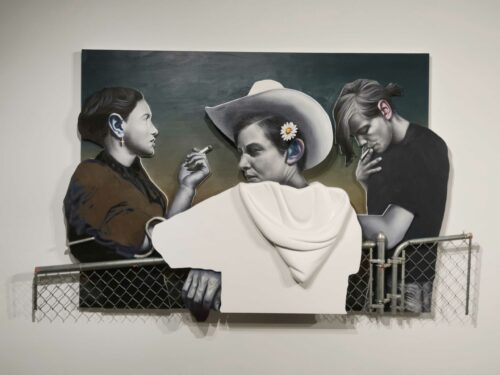
Chloe Chiasson
“In Europe before the nineteenth century, infanticide was practiced on a substantial scale. One reason for its decline was the establishment of foundling hospitals, which allowed mothers to abandon rather than kill their unwanted offspring. Thomas Coram, an
English sea captain, was so depressed by the daily sight of infant corpses thrown on the dustheaps of London that he worked for seventeen years to establish a hospital for foundlings. The hospital was chartered in 1739. In 1756 it received the support of the
English Parliament, which also recommended that asylums be opened in all the counties, ridings, and divisions of the kingdom. In France, Napoleon decreed in 1811 that there should be hospitals in every department. However, the demand for the service of such institutions far exceeded their resources. By the 1830s, the situation in France had become desperate; in 1833 the number of babies left with the foundling hospitals reached the fantastic figure of 164,319.”
Yi Fu-Tuan (Ibid)
I wonder then about the current plague of child abuse. Largely sexual but far from exclusively so, and the avatar for this is of course Jeffrey Epstein. I do wonder at what seems staggering high numbers of adult involved in child porn and child rape. The constant background drum beat of ‘missing children’ haunts the contemporary world. Israel seems daily to bomb schools or hospitals and to booby trap items that children might see as toys.
““The scope of its use is unprecedented, even by the standards of the mass media of the twentieth century. The scope of its influence is equally broad. By choice or necessity, we’ve embraced the Net’s uniquely rapid-fire mode of collecting and dispensing information.We seem to have arrived, as McLuhan said we would, at an important juncture in our intellectual and cultural history, a moment of transition between two very different modes of thinking. { }For the last five centuries, ever since Gutenberg’s printing press made book reading a popular pursuit, the linear, literary mind has been at the center of art, science, and society. As supple as it is subtle, it’s been the imaginative mind of the Renaissance, the rational mind of the Enlightenment, the inventive mind of the Industrial Revolution, even the subversive mind of Modernism. It may soon be yesterday’s mind.”
Nicholas Carr (The Shallows: What the Internet Is Doing to Our Brains)
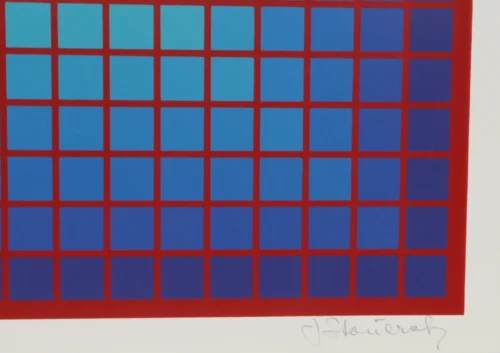
Julian Stanczak
There are news stories of entire families keeping children imprisoned in basements. Often chained. Malnourished. A family made up of mother and father, and a couple sons (not often daughters, interestingly) and all are carrying out the upkeep of these tortured children, and all are aware of each others sexual violence. The photos of sexual offenders almost without exception show sallow, overweight (usually) and very sad looking, rumpled, disheveled men. Largely (though again not exclusively) white men. And a disproportionate number are Israeli. Zionism seems to have extended its martial and coloniality into areas of erotica. Morbid symptoms. The racist ICE raids, the racist security checks and protocols of the Trump government, the UFC octagon on the white house lawn: are also morbid symptoms.
Friedrich Reck-Malleczewen (1884 – 1945) was a Prussian intellectual from a well known conservative family. He was ruled unfit for military service during WW1 and turned to travel writing and theatre criticism. He was a remarkable witness to the rise of National Socialism and his book, Diary of a Man in Despair remains possibly the best portrait of the rise of fascism.
Writing of Spengler, a man he knew and worked with, on Spengler’s death in 1936, :
“As to whether or not he ever perceived the rising of the irrational on the horizon of our existence where it can now be seen, whether he sensed that the ‘decline of the West’ announced by him was actually only the decline of the world created by Renaissance man in the last four hundred years—this I do not know. For it was his destiny that midway in his course he fell into dependency on the heavy-industry oligarchy, and this dependency began in time to have an effect on his thinking. I, at least, with the best will in the world, do not otherwise know how to reconcile the truly magnificent prophesying of the approaching Dostoyevskian Christianity, made in 1922 in the second volume of Decline, with the technocratic rhetoric which fills his later work.”
Friedrich Reck-Malleczewen (Diary of a Man in Despair)
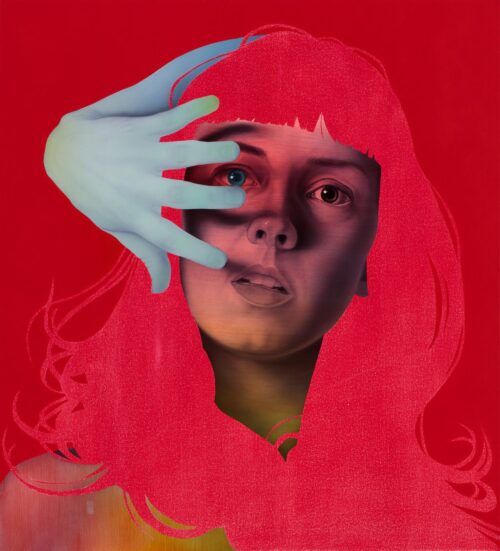
Jenny Morgan
Reck notes Spengler had no sense of humour — but that it paled before Hitler and his inner circle’s lack of humour. He returns again and again to the aesthetics (or lack thereof) of National Socialism. How the ugliness of fascism bled into nearly every part of daily life. And ‘the rising of the irrational’, which is precisely what one feels today. And has felt for a couple of decades.
And this next quote from 1942 does remind me of ‘Mar a Lago’ face:
“And what about today’s so-called ‘better health standards’—the elimination of contagious disease, and the raising of life expectancy; the disappearance of wasp-waists and whalebone-bellies, and the emergence of the ‘New German Look’? Oh, I wish we had them all back, those bad old times! At least, for God’s sake, now and then, you could find a human face, something of the old, unprettified German among those admittedly inferior types. If only by some lucky stroke of history we could just get rid of this visage of hysterical emptiness which is the typical physiognomy of Hitlerism!”
Friedrich Reck- Malleczewen (Ibid)
Hysterical emptiness fits Laura Loomer or any of the plasticized surgically ‘enhanced’ visages of Trumpian America. (The look features heavy botoxed lips, and for women, hair that is often described as the ‘Texas blowout’, and then nose jobs …narrowing the nasel bridge and straightening the nose, heavy makeup and fake eyelashes, enhanced cheekbones, glossy poreless skin, and face lifts of course, and wide eyes with an upward tilt — it is the desire for the fake. A sort of Birkin bag face.)
From Oct 1940:
Stefan à Wengen
Friedrich Reck- Malleczewen (Ibid)
As the years pass the horror of the war becomes palpable. From Sept-.1941:
“I do not know if the end of the world is at hand, as Dostoyevsky said. But this I do know, that these are years of a turning in human affairs which can never be changed again, and that the tyranny of an arrogant civilisation is at an end.”
Reck Malleczewen could be writing about the IDF, and in place of Goebbles he could insert Ben Gvir or Yoav Gallant. The parallels are not only with Israel. From Sept 1941 again…
“Monday, a gigantic victory is announced. Tuesday, not a soul can remember what it was. Huge numbers of prisoners are reported captured; no one believes the figures. Day in and day out, trumpets on the radio announce more victories—and we switch off as soon as we hear the first notes of the fanfare, with a feeling of insult.”
Friedrich Reck- Malleczewen (Ibid)
Myriam Holme
Trump, of course, does the same thing. Often via his secretary of defense…er….war, Whiskey Pete Hegseth. Or the oddly feminized and puffy little man, J.D. Vance. Or Marco Rubio, so cowed by Trump that he wore his gift shoes, three sizes too big, the entire day.
The morbid symptoms are many. National Socialism produced them. I think Gramsci was right, but perhaps also wrong. History was ending, in a sense, but history was ‘also’ circular. In 1882 Nietzsche rented a room in Genoa, Italy. He was quite ill and could not write. But then he bought a Danish-made Malling-Hansen Writing Ball. Nicholas Carr was an excellent chapter on this period. The point here is that Nietzsche’s writing changed as he began using this early typewriter of sorts. (Google it, as its rather surreal and brilliantly made). But Nietzsche was more aware than anyone of how his work and perhaps his thinking had been changed.
“One of Nietzsche’s closest friends, the writer and composer Heinrich Köselitz, noticed a change in the style of his writing. Nietzsche’s prose had become tighter, more telegraphic. There was a new forcefulness to it, too, as though the machine’s power—its “iron”—was, through some mysterious metaphysical mechanism, being transferred into the words it pressed into the page. “Perhaps you will through this instrument even take to a new idiom,” Köselitz wrote in a letter, noting that, in his own work, “my ‘thoughts’ in music and language often depend on the quality of pen and paper.”“You are right,” Nietzsche replied. “Our writing equipment takes part in the forming of our thoughts. ”
Nicholas Carr (Ibid)
The Net changed everything. Though again, it changed everything and it changed nothing. History is circular. History is straight line from antiquity, from before antiquity, to the future.
Sanjay Vora
I am aware of a change in my own writing, from pencil on lined notebook paper, to the computer. I am an inexplicably fast typist. I was best in my high school typing class, which was perhaps the best class I ever took-. But I often feel I write too fast. When I used pencil there was a limit to the speed with which I could express thoughts. You reflected more as you wrote analog.
“The conception of the adult brain as an unchanging physical apparatus grew out of, and was buttressed by, an Industrial Age metaphor that represented the brain as a mechanical contraption. Like a steam engine or an electric dynamo, the nervous system was made up of many parts, and each had a specific and set purpose that contributed in some essential way to the successful operation of the whole. The parts could not change, in shape or function, because that would lead, immediately and inexorably, to the breakdown of the machine. ”
Nicholas Carr (Ibid)
Today this idea of the brain as a machine — well now the brain as a computer — is enormously popular. This culture of morbid symptoms loves the idea of *progress*, of straight lines from the mists of history to the Jetson’s future. The brain is nothing NOTHING like a machine, or a computer. And nobody has solved the so called hard problem of consciousness. So the morbid symptoms Gramsci prophesied are not a part of this historical continuum, the Enlightenment and Descartian vision of civilization, of mankind.They are closer to psychoanalytic responses to trauma. The unconscious is a given, in a sense. So is consciousness. How can it be other? And people are capable of horrific violence because such violence, in some fashion or other, was visited upon them. Repetition is a basic fact of existence.

Ralf Peters, photography.
“Imagine that you wake from a dreamless sleep in a completely dark room. So far you have no coherent stream of thought and almost no perceptual stimulus. Save for the pressure of your body on the bed and the sense of the covers on top of your body, you are receiving no outside sensory stimuli. All the same there must be a difference in your brain between the state of minimal wakefulness you are now in and the state of unconsciousness you were in before.… This state of wakefulness is basal or background consciousness.”
John Searle (Consciousness and Language)
One cannot escape questions of sentience or consciousness. Just as one cannot escape the topic of death. They sort of go together.
“Cephalopods are an island of mental complexity in the sea of invertebrate animals. Because our most recent common ancestor was so simple and lies so far back, cephalopods are an independent experiment in the evolution of large brains and complex behavior. If we can make contact with cephalopods as sentient beings, it is not because of a shared history, not because of kinship, but because evolution built minds twice over. This is probably the closest we will come to meeting an intelligent alien.”
Peter Godfrey Smith (Metazoa)
Daniel Dennett wrote a nice review of Metazoa (a favorite book of mine) and he quotes the above. For this raises the key questions of ‘what is it like to be….’. Fill in as you wish, termite, mollusk, shark, eagle, sea sponge….and the same sense of the uncanny inexplicable problems arise. Now my question here is how can humans, how can human intelligence, perpetrate so much violence and suffering?
“Another punch in the passage quoted above reminds us that a good way to study minds sets aside, to the extent possible, the Wittgensteinian “way of life” we share in our linguistic communities, the commonalities that are apt to confound our thinking
with parochiality. We do not share a history, or a close kinship, with the octopus and yet it has a mind, as we can see if we just look. These philosophical messages interact: they point to the almost irresistible intuition that can be pumped by what might be called mere behavioral tempo and rhythm: if cephalopods moved in the clunky way of most existing robots, then in spite of the manifest purposiveness of their motions, it would be quite comfortable to suppose that they were some kind of zombies, marine robots with eight or ten appendages. (Cog, the humanoid robot developed by Rodney Brooks and his team at MIT some years ago, never approached consciousness, but it moved its arms and eyes and head with such humanoid vivacity and even grace that naïve observers often blurted out loud their startled conviction that it was conscious.)”
Daniel Dennett (Review of Other Minds; February 2019 Biology & Philosophy 34)
Giacomo Santiago Rogado
This is now inching closer to the sort of questions we should be asking. And asking in light of Reck Malleczewen’s reflections on fascim and societal regression.
“The whole explanatory enterprise is biology as reverse engineering, and if you want to understand consciousness (as contrasted with just staring gob-smacked at it and declaring it a mystery), you must ask and answer these fundamental questions, because consciousness is clearly expensive, both in terms of the R&D that has gone into its emergence over millions of years of evolution, and metabolically. Big complex brains are energetically expensive, even though they have been optimized for energy efficiency for eons. That is part of what makes the decentralized, distributed computational architecture of the cephalopods so fascinating: it turns out that there is more than one way of designing a nervous system that can think ahead effectively.”
Daniel Dennett (Ibid)
And here there emerges a more pointed question of time. But nature is not on the clock. Nature has hundreds of millions of years to tinker with cephalopods. And earlier still before the Cambrian explosion, uncanny developments occurred: such as stingers on the ancestors of jellyfish and certain cnidarians. Predation was not even a thing at that point. But the unsettling factor here is ‘time’. If scientists are right that the Sun burns out in 500 Billion years, then Nature ‘is’ on the clock and one might argue it wasted a shit load of time on sea sponges (phylum Porifera). I mean these organisms have a nervous system and consume food but are stationary. And they have been so for hundreds of millions of years. Sponges don’t do much. Actually, they *do* almost nothing. An efficiency expert would downsize oceans and just cut out sponge slackers.
So, the entire argument of consciousness, the so called ‘hard question’, feels somehow slightly beside the point when we consider natural history. It is hard for us (sic) to imagine millions of years and nothing changes. Cleopatra was born closer in time to the moon landing than to the building of the Pyramids.
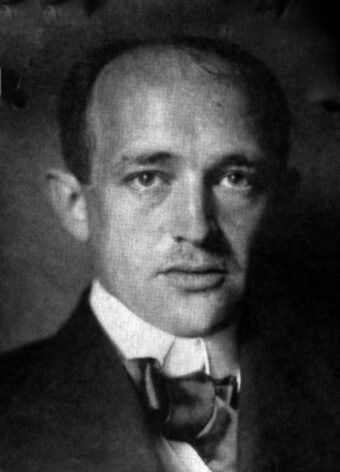
Friedrich Reck-Malleczewen
“Many years ago Thomas Nagel used the phrase what it’s like in an attempt to point us toward the mystery posed by subjective experience…. The term “like” is misleading here, as it suggests that the problem hinges on issues of comparison and similarity—this feeling is like that feeling. Similarity is not the issue. Rather, there is a feel to much of what goes on in human life….
That’s what has to be understood. But when we take an evolutionary and gradualist perspective, this takes us to strange places. How can the fact of life feeling like something slowly creep into being? How can an animal be halfway to having it feel like something to be that animal?”
Peter Godfrey-Smith (Ibid)
“To understand the origin of some structure, one must first understand what is essential about it—what features it must have to work at all.”
Maynard Smith and E.Szathmáry (The Major Transitions in Evolution)
Interesting quote. What is essential to work at all. But what do we mean ‘work’? Sea sponges work, I guess. The implication is to stay ‘alive’. But even alive is a fraught definition. To a degree anyway…because sponges are very close to being inanimate.
“What led to the emergence during the Cambrian of unlimited associative learning (UAL) and sentience? We argue that it was initiated by the evolution of a centralnervous system (CNS) that enabled associative learning (AL) and generated positive feedback loops between learning-driven adaptations. This produced evolutionary arms races, which accelerated the rate of metazoan radiation and resulted in UAL in arthropods and vertebrates and in diverse behavioral and morphological adaptations in the species that interacted with them. But with UAL, as with every great innovation, there was a price to pay. UAL could lead to overlearning, and overlearning would have led to stress, neurosis, and illness. There was therefore strong selection for active forgetting in animals manifesting UAL, which eventually contributed to the reduction in the high rates of evolution by the end of the Cambrian. It was thus the coevolution of learning, the neurohormonal stress response, and the immune system that drove the evolutionary dynamics of the diversification of Cambrian arthropods and vertebrates. However, the evolution of cognition and consciousness did not stop when the Cambrian explosion ended. Building on the functional architecture of UAL, millions of years later vertebrates, cephalopods, and possibly even some insects evolved imagination, dreaming, and the capacity to plan and flexibly choose among alternative future actions.”
Simona Ginsburg & Eva Jablonka (The Evolution of the Sensitive Soul; Learning and the Origins of Consciousness)
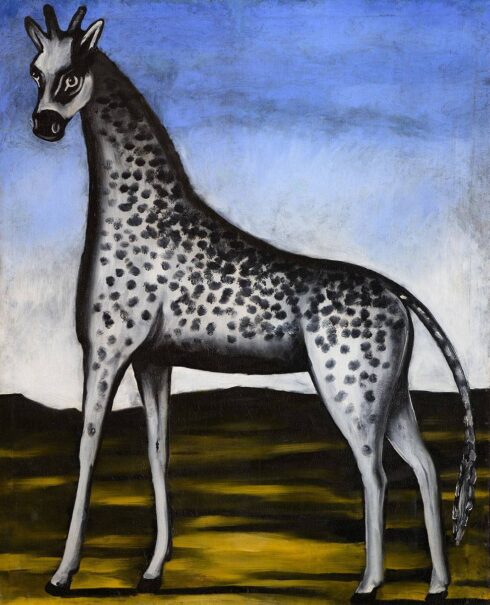
Niko Pirosmani
Again, earth before the Cambrian, as Ginsburg and Jablonka put it, was ‘ a very strange place’. It was an earth of mostly (almost entirely) ocean, and an ocean with a thick microbial mat populated by slugs and worms and ctenophores. And this state of almost stationary simple forms, a few microscopic bilaterians (which did have a nervous system, apparently) crawling very short distances. This went on (the Ediacaran Period) for roughly 90 million years. Its hard to see in all this a master plan of some sort.
“The causes of the Cambrian explosion have been sought in tectonic, geochemical, climatic, and biological processes, and the results of studies from all these perspectives paint a picture of the Cambrian as a unique junction period, with different and interacting factors contributing to the explosion. The climatic and geochemical factors include biologically significant increases in oxygen concentration, beginning approximately 635 million years ago, which led to the diversification of the Ediacaran fauna and the appearance of the first calcifying metazoans approximately 548 million years ago; pulses of global warming, the result of methane release associated with polar movements, which led to increased nutrient cycles and productivity; and changes in sea level that led to the flooding of continental margins, which greatly increased the range of habitable shallow-water areas and led to the rapid input of erosional by-products that brought about changes in the chemical constitution of the oceans, including an increase in calcium and phosphate concentrations (the permissive conditions for biomineralization, which animals exploited).”
Simona Ginsburg & Eva Jablonka (Ibid)
And yet all this cannot explain the relatively sudden explosion of new forms of life. A remarkable ecological and morphological diversification occurred — and there is no final explanation for this. But there are a few relevant side bar notes: there was a sudden arms race (sic) and aggressive predation unseen before. Hence the development of hard shells, burrowing, etc . But what interests me here is the idea of stress. That stress led to epigenomic changes, which increased selectable variation. This the product of predation and all the adjustments therein. This is very revealing, I think. And none of this really explains why, for example, one day a stinger appeared at the end of frond, to a creature stuck on the bottom of the sea floor. What was the moment it became a stinger?
The 12 cm puffer fish created complex circular patters on the sea floor to attract a mate (art as seduction I guess).
But stress — the recognizing of a predator or danger of some sort triggers a stress reaction.
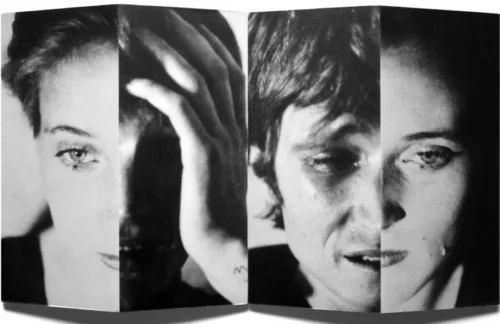
Anna Ostoya
“The life of all organisms is a precarious affair—they are always coping with threats and perturbations, often on the verge of annihilation. All living organisms have therefore developed ways of coping with their risky existence. Since perturbations leading to a far from equilibrium state (defined as stressful or leading to stress) are unavoidable and since a return to homeostasis as soon as possible is mandatory, all living organisms have evolved stress response systems—complex sets of reactions that manage out-of-equilibrium states and facilitate a return to homeostasis. Given the universality and inevitability of stress, it is not surprising that the stress response is based on a highly conserved network of cellular reactions and factors that can be found across all kingdoms of life.”
Simona Ginsburg & Eva Jablonka (Ibid)
This is worth pondering. I say that because philosophically speaking stress is a building block of evolution. Survival is stressful. Reproduction is stressful. There were millions of years in which certain species lived entirely in terror.
“Forgetting is a basic design feature required for flexible learning because brain space, especially in Cambrian animals, was limited and needed to be recycled as new learning occurred. But there is, as mnemonic pathologies and experimental interventions suggest, more to forgetting than this design constraint. A flexible nervous system requires that both memory and forgetting are regulated because an animal must choose among courses of action based on past experiences. This means that irrelevant information must be suppressed.”
Simona Ginsburg & Eva Jablonka (Ibid)
Forgetting is critical for survival.
“The attitude that everything should be forgotten and forgiven, which would be proper for those who suffered injustice, is practiced by those party supporters who committed the injustice.”
Theodor Adorno (The Meaning of Working Through the Past)
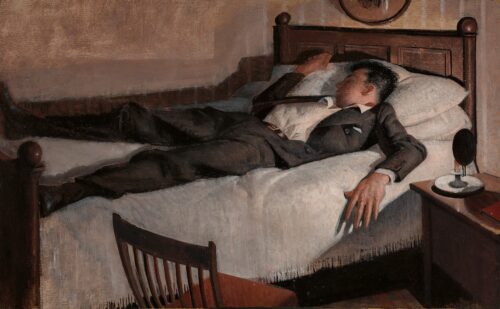
William Dobell (1936)
“We believe that the evolution of AL (associative learning), forgetting, and the stress response are linked. It is likely that AL, which evolved in Cambrian metazoans, induced chronic stress due to overlearning and led to the coevolution with AL of the stress response and forgetting. The neuroendocrinologist Robert Sapolsky described the well-managed stress response in mammals as the reason “why zebras don’t get ulcers” (the title of his book on the subject), in spite of the presence of menacing predators. He showed that if stress cannot be managed efficiently, it results in immunosuppression, sickness, and weakness.”
Simona Ginsburg & Eva Jablonka (Ibid)
As Sapolsky notes, there were probably the first nervous breakdowns during the Cambrian period. Also the first evidence of paranoia and PTSD. In evolutionary terms if a species didn’t cope, it went extinct. In even minimally conscious animals there must have been some form of ‘wanting’. This quickly becomes a philosophical question. At what point do these factors lead to cruelty and sadism? And it is here that these minimal expressions of hunger or fear beg questions of ‘desire’ today. And of what memory means. In what way did we inherit ontogenetic neural memory and transgenerational memory? This is the point where science inches into something else.
This is also a place where I feel as I am psychoanalysing science. (see puffer fish above). And it is bound up with the promises of western liberalism, and its cultic relationship to science (or really, scientism).
” In the modern era, primitive narcissistic fantasies of world domination have become scientific and technological realities, which the “reality-adjusted ego” cannot help but recognize. To be sure, Horkheimer and Adorno loathe this development, for it leads to a conception of the world as prey…”
C.Ford Alford (Narcissism: Socrates, the Frankfurt School, and Psychoanalytic Theory)
There is a quote at the top about ‘night terrors’. One of my twins had night terrors twice. It is unsettling to say the least. The child wakes but it is not strictly speaking ‘awake’. It is also, from my experience, not strictly speaking asleep either. The children experiencing night terror stare into space but are not aware of anyone around them. My boy was shaking uncontrollably. The child remembers nothing of the event. (it is related to sleepwalking in the sense the child is not really awake). But to discuss awake or asleep can be confusing. There is actually very little written about night terrors (also called sleep terrors). The cause is more or less unknown. It is believed that the parent should not try to wake the child. My personal experience was that it was pointless anyway.
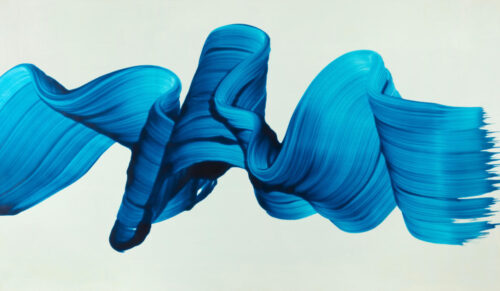
Jamie Nares
August 16th, 1944;
“The air reeks of death. I am not referring here, even, to what is broadcast from abroad—that 5,000 officers have been shot; that the Nazis are murdering everybody not to their liking regardless of whether there is a connection with the assassination attempt—yes, and shooting the family of the suspect at the same time they execute him to finish the job. No, what I have in mind is something that surrounds us like a frightful presage of things to come, that fills the summer air, and gives a ghostly cast to the light of the sun, so that it is as though we live day and night in the glare of a huge funeral torch. It is the certainty of approaching catastrophe that fills all our minds, horror and the horror of death that surround us. What is to become of a thoroughly coarsened people who instil in their youths the idea that political burglary and the murder of whole peoples are entirely legitimate life-aims, and whose military leaders did not for a single moment hesitate to back everything that was done, as long as things seemed to be going well. We breathe the air of death. We do not need to be told so, as the Woman’s Organisation leader in Obing, a harmless farm village, told us recently, when she extolled this ‘Führer’ of ours because ‘in his goodness, he has prepared a gentle and easy death by gas for the German people in case the war ends badly.’ Oh, I am not writing fiction. This lovely lady is no creature of my imagination. I saw her with my own eyes: a golden-tanned forty-year-old with the insane eyes of all this type—I remind you that next to the schoolteachers these female hyenas are among the most rabid of our Hitlerite whirling dervishes.”
Friedrich Reck- Malleczewen (Ibid)
Morbid symptoms. The West is living in a collective night terror. We cannot awake. We stare at something we cannot see. We have forgotten something critical. Something important, but we cannot remember what ‘important’ means.
To donate to this blog use the paypal button at the top of the page. Donations help keep the Aesthetic Resistance podcasts alive as well.
Speak Your Mind