


“Real art has the capacity to make us nervous. By reducing the work of art to its content and then interpreting that, one tames the work of art. Interpretation makes art manageable, conformable.”
Susan Sontag (Against Interpretation)
“The task of aesthetics is not to comprehend artworks as hermeneutical objects; in the contemporary situation, it is their incomprehensibility that needs to be comprehended.”
Theodor Adorno (Aesthetic Theory
“But a word in a poem is transformed, its meaning made precise and unique, by its placing in relation to the words around it: in the same way a shot in a film is given its meaning by its context, and each shot modifies the meaning of the previous one until with the last shot a total, unparaphrasable meaning has been arrived at. ”
Robert Bresson (Notes of a Cinematographer)
There was a retrospective of Wilhelm DeKooning’s drawings recently, and two essays on the show, one in The Atlantic and one in the New York Review of Books Both were good sort of typical magazine writing, but these days that’s more surprising than it might seem. I took note because I have a special love for De Kooning — he was the first of the Abstract Expressionists that I fell in love with. My very literary and wonderful Aunt (and bookstore manager and all around terrific literate human being) lived in La Jolla and I would go spend much of my summer there. La Jolla was not quite the exclusive ritzy enclave it is now. And she lived down by Bird Rock, the less ostentatious end of the city. Anyway, her late husband was a writer and painter and they had tons of books on art. The short version is I saw some prints of De Kooning and was immediately captured. What is interesting is that it was his colours more than anything else. I loved all the Ab Ex painters right from the start but De Kooning’s pinks and blues felt like freedom to me, for whatever reason. Pollock cast an enormous shadow over everyone at that point (this is the early sixties ) and his grandeur was hard to resist or even to confront. And I remember Franz Kline was almost equally worshiped. A bit later I was drawn (perhaps surprisingly) to Morris Louis and then to Barnet Newman and Kenneth Noland. But to all the New York School and later (what is now more usually called) Colour Field painters.
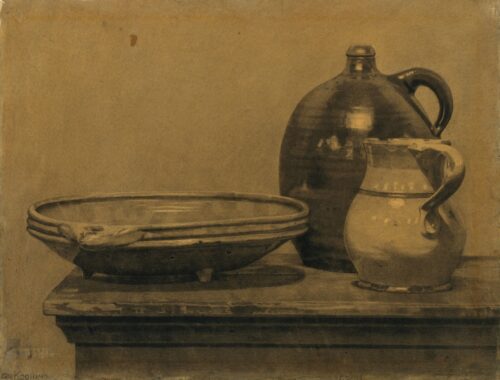
Willlem De Kooning (1919)
Now there is another article at The Atlantic on Milton Avery and his influence on Mark Rothko. What was a somewhat curious observation, but also a very insightful one, had to do with the (usually) summer retreats of mid century painters (and earlier to some degree). And this feels both true and worth more discussion.
“What’s remarkable is how often the main chapters of this story have unfolded in coastal or mountain retreats. Think of Claude Monet on the Normandy coast, wrestling with the influence of his mentor Eugène Boudin. Or Henri Matisse staying in Saint-Tropez with his mentor Paul Signac, before breaking with Signac’s neo-impressionist style and co-inventing fauvism. Or Pablo Picasso, goaded into radicalism by the latest bizarre creations of Matisse, retreating to the Spanish mountain village of Gósol and, mere months later, beginning work on his proto-cubist masterpiece, Les Demoiselles d’Avignon. All of these key episodes happened in agreeable resorts, seaside ports, and villages, far from the sophisticated cities assumed to have been the cauldrons of modernism. Modern art in America is no different. Its story can scarcely be told without reference to artists summering on the Atlantic Coast, including Winslow Homer, Marsden Hartley, and Edward Hopper in Maine and Massachusetts and Jackson Pollock, Lee Krasner, and Willem de Kooning on Long Island. Beginning in the early 1930s, three Americans—Milton Avery, Mark Rothko, and Adolph Gottlieb—began spending summers together on Cape Ann, along the coast of northeast Massachusetts.”
Sebastian Smee (The Painter who Shaped Rothko, The Atlantic)
One can think of Black Mountain College, too, and other artist colonies (for writers, there are dozens) or schools. And I wanted to note this because art is often not really ‘taught’ as much as it is ingested in some diffuse way, a kind of Bourdieu-ian Habitus of culture. It is important to eat with and cook with, to take walks with or have affairs with, other artists, often older. In an era of MFA deadness and Academic torpor and stagnation, I think the loss of this informal freedom from structure and rules is hugely important.
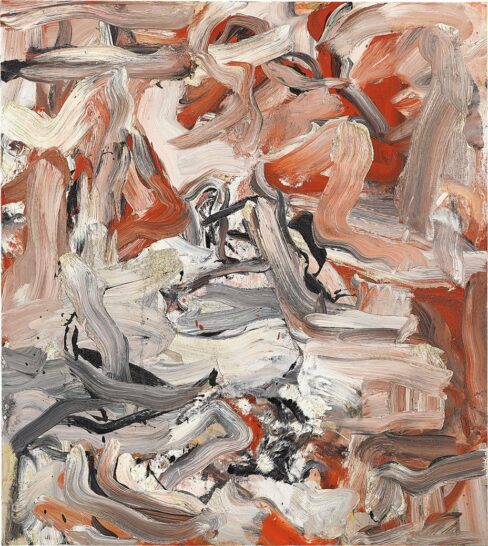
Willem de Kooning (1976)
For theatre, certainly, this sort of habitus like cross pollination was built into modernist companies. But now, in spite of some very good but sporadic work going on in various retreats, I actually can’t think of any of real significance. Perhaps this is a much bigger loss than we all realize.
Another intereseting side bar note is that De Kooning came to America as a stoaway. Lived for a year or two in Hoboken and then moved to NYC. He remained without legal status in the US for thirty five years. Today ICE agents would have broken down the door to his studio and deported him.
De Kooning also did not attend expensive art schools. He worked as a sign painter and department store window dresser, as well as advertising layout designer. But De Kooning is unanimously seen as the most precise and proficient technician among, probably, all of the 20th century.
It is very difficult to make art today. Perhaps all artists at all times have felt this way. But I think this is likely a uniquely difficult period. Just today as I scrolled social media, read the news at legacy outlets, and then read alternative sources I came across three stories, all unrelated, taking place in differrant parts of the U.S., about police officers (one retired, two serving) engaged in trading or selling child pornography. I read two more stories, also unrelated, of active police officers molesting the children of friends. I read another story of Pediatrician who had molested children under his care for over a decade. Somehow nobody suspected. Another story of a paramedic (working out of a Fire Station in a medium sized city) who had filmed himself unrinating and masturbating into the station ice machine (and elsewhere). And he sold the pictures he tookk of these acts online. What was most interesting to me was he sold them for seven dollars, each. How did he arrive at that particular price? Its as if, well, five isn’t enough but I’d price myself out of the market at ten. My point is that this was just one day. This is the new EVERY DAY. Also more stories (and these I have lost count of) of white republican politicians, and pastors, engaged in child sexual molestation. Invariably these are outwardly very pro ‘family’ and heterosexuality. Nearly all are closeted.
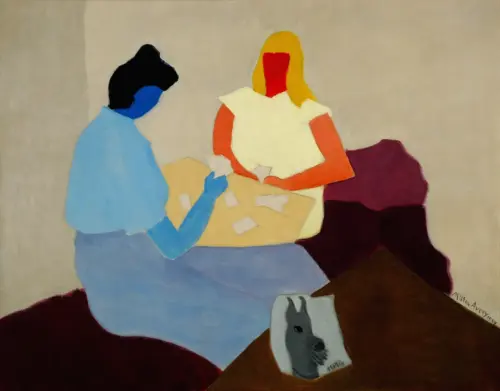
Milton Avery
“The question is how. What would criticism look like that would serve the work of art, not usurp its place? What is needed, first, is more attention to form in art. If excessive stress on content provokes the arrogance of interpretation, more extended and more thorough descriptions of form would silence. What is needed is a vocabulary—a descriptive, rather than prescriptive, vocabulary—for forms. The best criticism, and it is uncommon, is of this sort that dissolves considerations of content into those of form.”
Susan Sontag (Ibid)
This is exactly why so much leftist arts criticism is so bad. The left wants art to be morally instructive (and politically instructive). Sontag suggests that Panovsky and Benjamin are worthy critics, and I’d agree. Adorno of course is the greatest thinker on arts of the last century. Sontag also, interestingly cites Roland Barthes. But Sontag’s essay was written in 1966. That is a half century ago. Since then John Berger and T.J. Clark have written some brilliant criticism. Still, her desire for a vocabulary of criticism remains unfulfilled. And I suspect the reason is tied to all the forces of de-literizing the society: mass marketing and the rise of Madison Avenue, along with the technology linked to screens, and probably most importantly the economic coercion that marginalizes artists and crafts people in general. Sontag was pretty prescient, and her note on irony being the alibi that serious artists often interject, off handedly, as a means to stave off accusations of pretentiousness. But that said, it is curious that in 1964 there is no mention of Adorno, from whom she borrows rather copiously. Sontag had exemplary taste though, from Godard to Bresson to Artaud to Norman O. Brown to Jack Smith, to Nathalie Sarraute, to Simone Weil, to Genet, to Camus, to her essay on camp and the one on ‘Nazi style’; she was pretty impressive in that respect.
The basic idea of her most famous essay, On Interpretation, was that interpretation sets up a ‘shadow world of meanings’. Above all else do not interpret the artist’s intentions. Celine was a fascist but a great writer. Ok, what do I mean by great? In Celine’s case he created a voice that seemed (or did) obliterate the conventions of accepted storytelling. This was a voice shouting in your face.
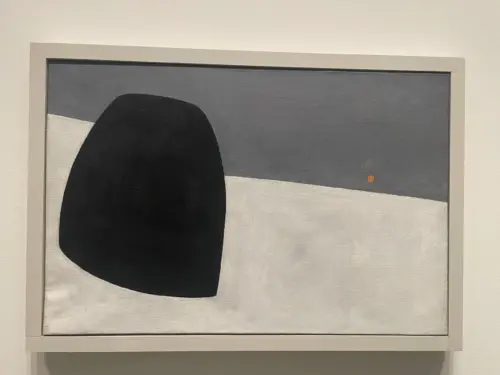
Alexander Calder (1930)
“The publication of Norman O. Brown’s Life Against Death (1959) in a paperback edition is a noteworthy event. Together with Herbert Marcuse’s Eros and Civilization (1955), it represents a new seriousness about Freudian ideas which reveals most previous writing on Freud published in America, be it the right-wing scholasticism of the psychoanalytic journals or the left-wing cultural studies of the Freudian “revisionists” (Fromm, Horney, etc.), as theoretically irrelevant or, at best, superficial.”
Susan Sontag (On Norman O. Brown, from Against Interpretation and other Essays)
This is very good and something you havent heard, save for Russell Jacoby, since the 60s. Something which Sontag predicted, in a sense.
“Another distinction which it {Life Against Death } possesses: it shows, convincingly, that psychoanalysis is not to be written off—as many contemporary intellectuals have done—as one more vulgar and conformist “ism” (along with Marxism, original sin-ism, existentialism, Zen Buddhism, etc., etc.). The disenchantment with psychoanalysis which animates the most sophisticated voices of our culture is understandable; it is difficult not to reject a view which has become both so official and so bland. The vocabulary of psychoanalysis has become the routine weapon of personal aggression, and the routine way of formulating (and therefore defending oneself against) anxiety, in the American middle classes. Being psychoanalyzed has become as much a bourgeois institution as going to college; and psychoanalytic ideas, incarnated in Broadway plays, in television, in the movies, confront us everywhere. The trouble with psychoanalytic ideas, as it now appears to many, is that they constitute a form of retreat from, and, therefore, conformity to, the real world.”
Susan Sontag (Ibid)
If one wants verification for leftist problems, and the assault on psychoanalytic truths, read this report on the Socialism 2026 event.
https://open.substack.com/pub/damagemag/p/victims-of-socialism?r=12qzc&utm_campaign=post-expanded-share&utm_medium=web
(Note: this piece was written by a guy who is a regular contributor to the rather odious Jacobin magazine, itself a part of the caricature left).
Sontag was not always right, her essay on Artaud is just wrong, but then she was not really a theatre person. She did write convincingly on Ionesco, and Brecht, and she rightly called O Neil and Miller sentimental mush. But on the whole as I re-read her I am surprised how generally insightful and, really, ahead of her time she was. That may seem an odd remark because today’s bourgeois intellectual snob would say, oh, Sontag is so 1970.
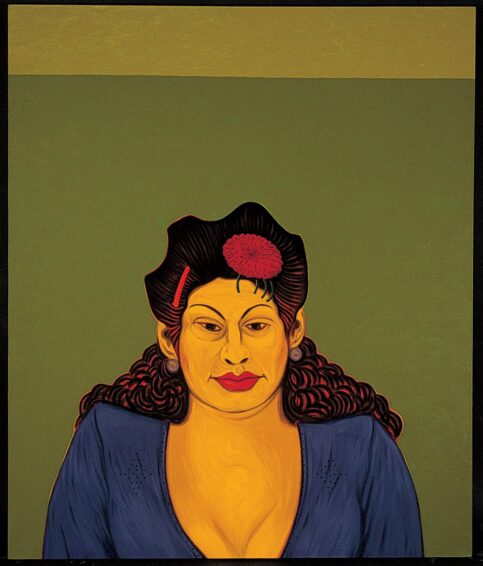
Cesar A. Martinez (La Chata)
“Psychoanalysis is conceived by Brown not as a mode of treatment to smooth away the neurotic edges of discontent, but as a project for the transformation of human culture, and as a new and higher level in human consciousness as a whole. Freud’s psychological categories are thus correctly seen, in the terminology of Marcuse, as political categories.”
Susan Sontag (Ibid)
This is very true and reminds me of today’s arguments (er, debates) about AI (or as The Donald insists, SI) when I try to explain that AI ‘IS’ ideology. It is a political technology (Yarvin Katz is great on this topic). So, back to art here, and to the philistinism so prevalent today. Art is always political, always, but it is not political in the ways (simplified way I would argue) that Trots or Tankies or bourgeois liberals think.
“Art is redemptive in the act by which the spirit in it throws itself away. Art holds true to the shudder, but not by regression to it. Rather, art is its legacy. The spirit of artworks produces the shudder by externalizing it in objects. Thus art participates in the actual movement of history in accord with the law of enlightenment: By virtue of the self-reflection of genius, what once seemed to be reality emigrates into imagination, where it survives by becoming conscious of its own unreality.”
Theodor Adorno (Aesthetic Theory)
Adorno privileged music, but it is not surprising his favourite modern writers were Kafka and Beckett. He did not write about fine art much, which is curious. The above paragraph is typically difficult to the point of impenetrability. Now ‘the shudder’ is a somewhat contested term and I take it more as that experience of oceanic and uncanny satori rather than the more current focus on an emotional shock. But then ’emotional shock’ is reductive. Emotional in this context means what? The kind of shock (and shock is the wrong word) is one close to the erotic, in a sense I associate with Dionysian and Nietzsche. And Adorno (reluctantly, in a late lecture) said Nietzsche had more impact on him than anyone else. The shudder is not the same, at all, as the surprise of Norman Bates appearing in the shower. There is duration, for one thing. There is an interesting comparison to be made between Bresson, as an example, and Murnau (Faust), and then say Robert Lowell’s poetry.

Faust (F.W. Murnau,dr. 1926)
In Bresson, who even now is a pretty marginal figure to most film school students, Sontag touches on the reasons for this lack of appreciation (though there is more now than in 1967):
“The reason that Bresson is not generally ranked according to his merits is that the tradition to which his art belongs, the reflective or contemplative, is not well understood. Particularly in England and America, Bresson’s films are often described as cold, remote, overintellectualized, geometrical. But to call a work of art “cold” means nothing more or less than to compare it (often unconsciously) to a work that is “hot.” And not all art is—or could be—hot, any more than all persons have the same temperament. The generally accepted notions of the range of temperament in art are provincial. Certainly, Bresson is cold next to Pabst or Fellini. (So is Vivaldi cold next to Brahms, and Keaton cold next to Chaplin.) One has to understand the aesthetics—that is, find the beauty—of such coldness.”
Susan Sontag (The Spiritual Style in Bresson from Against Interpretation and Other Essays)
Sontag rightly emphasizes Bresson’s form.
“But—all claims for intellectual coolness or respect for the mystery of action laid aside—surely Brecht knew, as must Bresson, that such distancing is a source of great emotional power. It is precisely the defect of the naturalistic theater and cinema that, giving itself too readily, it easily consumes and exhausts its effects. Ultimately, the greatest source of emotional power. It is precisely the defect of the naturalistic theater and cinema that, giving itself too readily, it easily consumes and exhausts its effects. Ultimately, the greatest source of emotional power in art lies not in any particular subject-matter, however passionate, however universal. It lies in form. The detachment and retarding of the emotions, through the consciousness of form, makes them far stronger and more intense in the end.”
Susan Sontag (Ibid)

Ron Davis (2005)
It is interesting, though, to compare a Robert Wilson with Bresson. Why is it that Bresson elicits such a deep experience (for lack of a better word here) than Wilson? Now I am sure there are those who think Wilson is deeper, but I can only argue for my position. And Sontag describes Bresson creating a filmic language. A narrative. Wilson is visual, but he is not narrative. He is also, in some sense, manipulative (as is David Lynch). This is hugely important to understand, I think. Bresson was concerned to an obsessive degrree with text. And by the time of later films he was using voice over narration, but in a way that did not reveal so much as double the action. The images are stripped of conventional ideas of suspense or anticipation. A number of ‘film noir’ use voiceover for reasons other than moving the plot forward, to fill in the gaps. It is used to give voice, however briefly, to the sensibility of the narrative. This is a film language — the form is filmic and pared down to something only available to the camera. Also (and Sontag hints at this) the ‘story’ is largely known ahead of time (like Greek tragedy). Even if the audience does not know this particular story or what will happen, the audience still knows that this is ‘this’ kind of narrative. Compare to Nolan’s Odyssey, a story everyone knows, but which is still told in conventions of suspense and tension. Or worse, as Michael Haneke said of Spielberg, in Schindler’s List, the form was almost pornographic in relation to the subject matter (or content). In Wilson there is an intentional disregard for narrative. And I suppose that is fine, it just doesn’t interest me because it feels like illustration.
My favorite Bresson is quite possibly Lancelot du Lac, made a decade after Sontag’s essay on Bresson. But she chose it for her list of the fifty greatest films of all time. The point here is that narration is not exposition or explanation.
“ But what is central to Bresson and, I think, not to be caviled at, is his evident belief that psychological analysis is superficial. (Reason: it assigns to action a paraphrasable meaning that true art transcends.) He does not intend his characters to be implausible, I’m sure; but he does, I think, intend them to be opaque. Bresson is interested in the forms of spiritual action—in the physics, as it were, rather than in the psychology of souls. Why persons behave as they do is, ultimately, not to be understood. (Psychology, precisely, does claim to understand.) Above all, persuasion is inexplicable, unpredictable. ”
Susan Sontag (Ibid)

Larry Bell
This is key to any discussion of aesthetics. There is nothing to ‘know’. And she rightly notes that psychoanalysis does not understand anything, either. There is no message. The ‘shudder’ is a historical quest. The search for the lost treasure (etc) is a plot, not a narrative. Plots end. That ‘shudder’ is related to ‘das ding’ in Freud. And it becomes about death, as well. We all die, even the Sun will die (we are told). How does tragedy exist in relation to death? In Shakespeare the stories are largely irrelevant. The relevant is the form, the ‘language’ of theatre experience. (see Jan Kott on King Lear and the Mad Tom on the heath scene). Mednick used to say theatre was a form of thinking. Sontag quotes Cocteau who said that society today lacked a syntax. And syntax was moral. This is deceptively profound, I think. Great art is moral by definition. But it is the morality of form, not message or content. And for contemporary audiences this is very counter-intuitive.
“This double movement of spirit in art describes its protohistory, which is inscribed in its concept, rather than its empirical history. The uncheckable movement of spirit toward what has eluded it becomes in art the voice that speaks for what was lost in the most distantly archaic.”
Theodor Adorno (Ibid)
The movement of spirit toward what has eluded it. What has eluded it remains unknown.
“When Brecht or William Carlos Williams sabotages the poetic and approximates an empirical report, the actual result is by no means such a report: By the polemical rejection of the exalted lyrical tone, the empirical sentences translated into the aesthetic monad acquire an altogether different quality. The antilyrical tone and the estrangement of the appropriated facts are two sides of the same coin. Judgment itself undergoes metamorphosis in the artwork. Artworks are, as synthesis, analogous to judgment; in artworks, however, synthesis does not result in judgment; of no artwork is it possible to determine its judgment or what its so-called message is. ”
Theodor Adorno (Ibid)
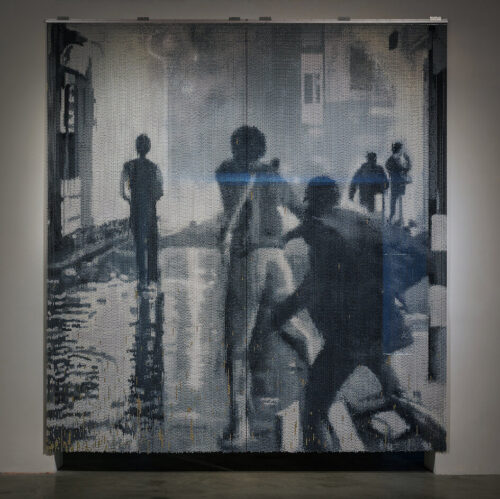
Cosmo Whyte
William Carlos Williams wrote poems that felt like prescriptions for one or another medicine. Williams could hear the echos of his ‘work’. He transcribed something of his extensive medical training in the form. He did not need to depict workers at a quarry or on a farm. And this sort of bleeds into another essay of Sontag from the same collection and that is on the death of Tragedy. Her views here are their most eccentric, but not un-amusing. And I mean that in a sincere way. Sontag thinks Shakespeare only wrote one tragedy (Macbeth ) and the rest were meta-plays. Its not entirely clear what is meant by that and it doesn’t matter. Certainly King Lear (in fact the full title is The Tragedy of King Lear) is a tragedy, but if this idea helps get her to the point where Prospero is linked to the Police Chief in Genet’s The Balcony, then I’m all for it. But there is always a danger in starting to discuss art in terms that feel like a competition.
“ It would be more correct to say, as Simone Weil does, that the Iliad—as pure an example of the tragic vision as one can find—is about the emptiness and arbitrariness of the world, the ultimate meaninglessness of all moral values, and the terrifying rule of death and inhuman force. If the fate of Oedipus was represented and experienced as tragic, it is not because he, or his audience, believed in “implacable values,” but precisely because a crisis had overtaken those values.”
Susan Sontag (The Death of Tragedy, from Against Interpretation and other Essays)
Art is created against a societal backdrop. Usually a traumatic backdrop. Today on the senate floor Tommy Tuberville gave a speech warning of the transgender takeover, and of ‘furries’. I honestly am not fully sure what he meant by this but it is some form of Evangelical hallucination. He accused flight attendants (sic) and air traffic controllers of being *furries*. Nobody (outside of Tuberville’s church perhaps) knows what the hell a ‘furry’ is. A cross dressing molester in a bunny costume? Nobody knows. Tuberville used to be the head football coach at Auburn University, and then went into politics. He is clearly in-fucking-sane. Has anyone seen commercial or even private airline pilots in bunny costumes? Or teddy bear costumes? This is mental illness of a rather extreme sort and yet is it being normalized. I am arguing that we, as a society, need to find an art appropriate to this kind of madness.
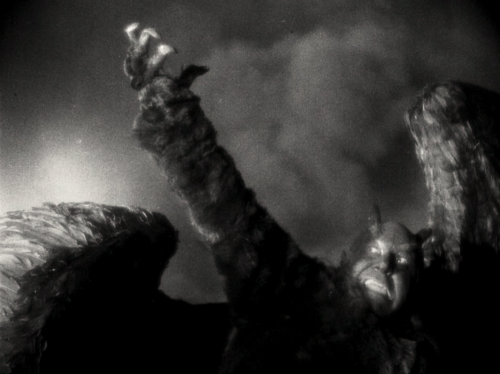
Faust (F.W. Murnau, 1926)
What Adorno described as ‘calculated fun’ (the culture industry) has had truly deleterious affects on critical judgement. It is the ‘entertainment’ thing again. Tragedy cannot escape self parody, firstly. And while many, and often even I, enjoy stuff like Monty Python or SNL, I also recognize how intellectually compromised are such parodies and comedy. Jon Stewart recently ran about as cowardly an interview as its possible to have, with Hollywood agent Ari Emanuel (brother of Rahm). This kind of next level acceptance of Zionism and colonialist settler violence, Islamaphobia, etc, was hardly surprising, but it shows that the conditions for a tragic vision do not exist. Stewart criticizes Trump, even mildly criticizes Israel, but on a meta-level he is validating the capitalist system and even Imperialism itself. Ari Emanuel said he thinks ‘genocide’ isnt happening in Gaza. Thinks that the wrong word. Stewart said nothing.
An interesting aspect of celebrities like Stewart (or comedian, whatever) is their inability to sell ‘sincerity’. They do ‘serious face’ and pitch their voice 10% lower when engaging in ‘serious’ topics. And I suspect even their most ardent fans dont buy it. The equivalent is Leo DeCaprio playing dress up — it is simply too close to parody. That DeCaprio’s best performance was Catch Me If You Can, is unsurprizing. The cultural superstructure is infused with this calculated fun, however temporarily repressed it is.
Dante or Goethe or Kierkegaard or Paul — the sheer magnitude of the intellects, and more perhaps, the magnitude of their projects, the seriousness of their projects (and Augustine and Nietzsche and Milton et al) do not exist today. They simply do not. And perhaps this is partly why I love Abstract Expressionism, which aspired to that grandeur. That scope. And the troublesome (one of the troublesome) aspects of the Socialism 2026 confernece was the knowledge of how quickly they would reject these ideas.
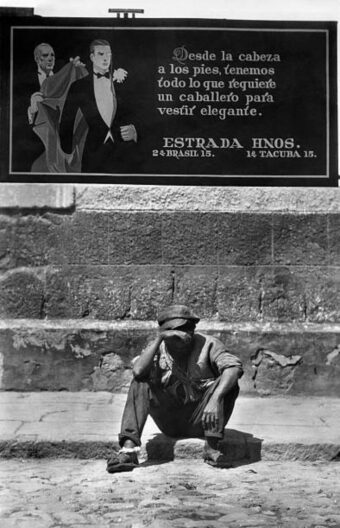
Tina Modetti, photography.
Clement Greenberg (Art and Culture)
Greenberg gets a bit of a bad rap these days. But he was quite an astute critic. And he notes that the pre-conditions for kitsch are “the availability close at hand of a fully matured cultural tradition, whose discoveries, acquisitions, and perfected self-consciousness kitsch can take advantage of for its own ends.” The fully matured cultural tradition, well, ok but what he means is ‘a’ cultural tradition. And almost any will do. And this is a problem today for where once stood a fully matured cultural tradition there is now a badly crumbling and decaying cultural tradition.
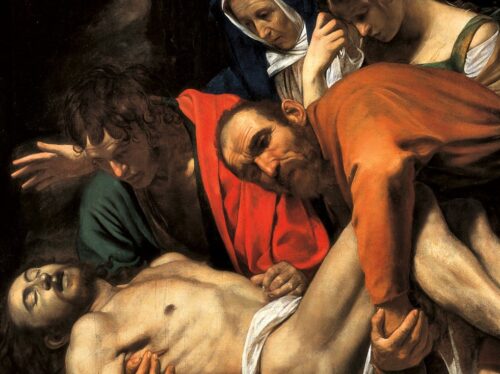
Caravaggio (The Entombment of Christ, 1604 detail)
“Self-evidently, all kitsch is academic; and conversely, all that’s academic is kitsch.”
Clement Greenbert (Ibid)
I’m accused of condemning the University system, at least the arts departments, with too broad a brush. Im just jealous or resentful or something. But in fact art is meant to tear down that system: all good art anyway. So toiling away to please your academic betters is rather a losing proposition.
“A magazine like The New Yorker, which is fundamentally high-class kitsch for the luxury trade, converts and waters down a great deal of avant-garde material for its own uses.”
Clement Greenberg (Ibid)
This is remarkably prescient. Greenberg wrote this in 1939. That’s almost hard to believe. The ascension of high class kitsch was been dramatic. And Sontag grasped this when she wrote on Camp. Kitsch and Camp have a complex relationship. And one that has changed over time because of the rise and sheer volume of high class kitsch. A Jon Stewart is his own New Yorker. There has also appeared a new kind of ‘portentous’ in cultural work. Hollywood prestige product trends toward portentous in general. (just look at the Academy Awards for best film over the last ten years). But also a cultural climate in which kitsch and especially high class kitsch is so ubiquitous, that serious work must somehow factor that reality in its own work. A work like Waiting for Godot teeters now, precraiously, on the knife’s edge of kitsch — only because it has become a signifier for ‘serious’. And such a signifier is multi faceted. An image from almost any production of Godot is prime material for an ad campaign in any Conde Nast publication. The cultural system is eating itself. And Camp has pretty much outlived its usefulness, though certainly there are still camp products (The TV show Euphoria is pure camp without knowing it, which is rather a pre-requisite).
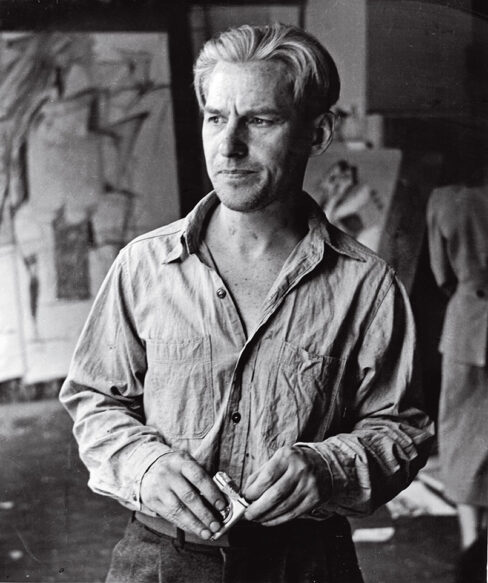
Willem de Kooning (1950) (Rudy Burckhardt, photography).
In the age of Trump, and especially his obsession with making culture white and classical, and in erasing history, can be found the echos of Mussolini more than Hitler. The ICE agents violence is pure Nazi, but the aesthetics, or anti-aesthetics is Mussolini. The debacle that was the Socialism 2026 conference is mirrored in fine art by the recent Venice Bienalle. I include a tepid review by Hyperallergic only because it offers a pretty good picture (sic) of what was being presented.
https://hyperallergic.com/the-worst-national-pavilions-at-the-venice-biennale/
From the rampaging racist ICE regime to the ghastly planned Triumphal arch, Trump’s sheer vulgarity is one with the delirium of DC hearings — from Kash Patel’s bizarre bestiality testimony to Tuberville’s *furries* — the entire culture is regressing at warp speed, but not backward, but rather foward to a NEW barbarism. One part Evangelical and one part Zionist settler colonialism. That is the reality artists must face and must cast aside careerism and all liberal bromides.
“Artworks speak like elves in fairy tales: “If you want the absolute, you shall have it, but you will not recognize it when you see it.” The truth of discursive knowledge is unshrouded, and thus discursive knowledge does not have it; the knowledge that is art, has truth, but as something incommensurable with art.”
Theodor Adorno (Ibid)
To donate to this blog (and to the Aesthetic Resistance podcast) use the paypal button at the top of the page.
Do you have a link for Yarvin Katz ?
Thanks.
https://cup.columbia.edu/book/artificial-whiteness/9780231194914/