


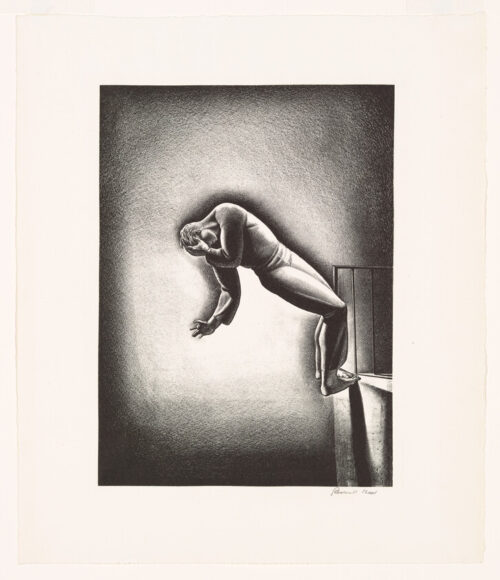
Rockwell Kent
“Science, generally speaking, costs the capitalist nothing, a fact that by no means hinders him from exploiting it.”
Karl Marx (Capital, Vol 1)
“Language was dis-covered as its metaphysical cover was dissolved. Marx begins by noting that metaphysics is language concealed: ‘The philosophers would only have to dissolve their language into the ordinary language, from which it is abstracted, to recognise it as the distorted language of the actual world, and to realise that neither thoughts nor language in themselves form a realm of their own, that they are only manifestations of actual life.’”
Harry Redner (The Ends of Philosophy)
“What another person is thinking, believing or feeling is inaccessible to us, such that we may be unsure what their thoughts, beliefs and feelings are; indeed, we may be unsure that they have thoughts, beliefs and feelings at all.”
Richard Allen and Malcolm Turvey (Wittgenstein’s Later Philosophy)
“You have come out of the hollow, into the clearing. The clearing is empty. Why do you rush back into the hollow? Desire is a hollow.”
Buddha, The Dhammapada
“I am not a religious man, but I cannot help seeing every problem from a religious point of view.”
Ludwig Wittgenstein (In conversation with Maurice O’Connor Drury)
The Prisoner’s Dilemma thought experiment is hugely popular (Google search says it was cited 62,000 times in 2025). It presupposes abstract rationality in abstract prisoners. There is not a totally dissimilar issue with the Monty Hall problem. (you can easily google both of these). I have written before about the problems with game theory in general. And with economics. In reality economics has no philosophical value at all. Nor does the Prisoner’s Dilemma, (and perhaps worse is the Iterated Prisoner’s Dilemma) which is mostly a statistical exercise in the same way the Monty Hall Problem is an exercise in conditional probability.
What interests me here is more why these problems have such cultural popularity. And I think one partial answer is that they eliminate the human psychology while (sort of) pretending to be about said psychology. There is an attraction to believing that ideas of justice and reason can be found in algorithmic computations based on puzzles or logic games. But this is a symptom, a symptom of spiritual malaise, I believe.
“It is the lacrima rerum, the tears of things, which shall mostly concern us in this study of the Twentieth Century, the “age of catastrophe,” as the historian Eric Hobsbawm calls it. (We follow Hobsbawm in dealing with the period 1914-91 as what he terms the Shorter Twentieth Century, but which we shall refer to as the Twentieth Century for short). Perhaps never before in human history has evil been so rampant, so brazen and exultant, and enjoyed so much popularity. Masses of people joyfully embraced it in order to murder masses of others, all in good conscience.”
Harry Redner (The Triumph and Tragedy of the Intellectuals)
Redner is an oddball minor philosopher/academic, raised and educated in Australia, born to Austrian/Jewish parents, and who later taught at Yale and other far less known Universities. He is a curious mix of genuine insight and intelligence, and utterly confused political positions (self contradictory throughout — from admiration for Eric Hobsbawm and Karl Marx, to a demonizing of communism and extensive quoting of Solzhenitsyn. And this seems ever more prevalent (Redner died in 1983) from Theweleit last posting, to Norman Finklestein this week dissing Maduro (hugely unpopular he said) and the Iranian clerics and government. At the same time Norman perceptively critiques Zionism and U.S. imperialism. Finklestein is a terrific anti Imperialist voice, and anti Zionist, and unlike Redner, he is well aware that most of (nearly all) the state violence of the 20th century can be laid at the feet of the West. I suspect his failure to differentiate the voices of opposition to Maduro from the voices of real working class Venezuelans, and for that matter, Venezuelans of all stripes who continue to live there, is one of the dangers of a life spent in Academia (especially in the US). Finklestein’s parents were survivors of Nazi camps, and both were fervently pro Soviet, seeing the USSR as the force that saved them from the concentration camps. Finklestein also said he was unsure which way the Iranian people would turn after the Mossad infiltrated protests — and this is as telling as the Maduro comments. Unsure? Did he really think the Iranian people would side with the Western alliance?

Leah Ke Yi Zheng
But I want to return at the start here to game theory (at least to *problems* such as the Prisoner’s Dilemma) because in the week of the Artemis launch and successful return, I think the cult of science is worth thinking about. In his Philosophical Investigations, Wittgenstein, discussing science wrote; “It was true to say that our considerations could not be scientific ones”. For Wittgenstein, philosophy was in no way about constructing theory, nor was it about science.
“All problems of a properly philosophical nature, for Wittgenstein in his later philosophy, are the result of an inability to clearly survey relevant segments of grammar.”
Richard Allen and Malcolm Turvey (Ibid)
Problems such as the Prisoner’s Dilemma, are mostly meaningless. They ‘prove’ nothing. It’s not even pedestrian sociology. It’s nothing. They are puzzles, and like the Rubic’s cube, there is an attraction to ‘solving’ them. The idea of abstract prisoners and abstract prisons is very attractive as it manages to keep thoughts away from real prisons and real prisoners.
“The later Wittgenstein may be described as a ‘humanist’ writer in a literal sense of the word. He displays what is distinctively human about language, about art and about human beings themselves; and also, ofcourse, about philosophy itself. What is distinctively human, in this sense,may be contrasted with the realm of scientific research and theory. In this realm Hume’s dictum is (with some reservations) appropriate: ‘For all we know a priori, anything may be the cause of anything’.”
Oswald Hanfling (Wittgenstein on Language, Art, and Humanity)
This feels related to the Prisoner’s Dilemma question. And I say question because I continue to try to understand such puzzles as having any meaning whatsoever. The Stag Hunt is another such game theory staple. And it is even more vacant, honestly. There is a kind of cheating going on with these ‘games’ or ‘problems’. There are assumptions about human psychology, firstly, on a nearly kindergarten level, and about rationality. You simply cannot posit ‘two rational people’ without at least a cursory definition of rational (which I think is nearly impossible, to be honest).

Claire Tabouret
confirmed; he is merely drawing attention to an obvious fact: that features associated with games appear in some games and not in others. His point is that there need be nothing more than that – nothing of a theoretical, ‘hidden’ kind to enable that word to perform its function. The matter would be different if he had specified the contents and extent of a suitable ‘network of similarities’, but such an attempt would be contrary to the passage I quoted from PI ß69 (‘How should we explain to someone what a game is?’). Regarded as an explanatory theory, the ‘family resemblance theory’ would, in any case, suffer from an obvious weakness to which Wittgenstein himself drew attention. To such an ‘explanation’, he pointed out, ‘it might be objected that a transition can be made from anything to anything’ (PG ßß5-6). Given any two items, there would always be some features or features that they shared.”
Oswald Hanfling (Ibid)
There are a number of recent papers focusing on Wittgenstein’s affinity with Buddhist thought and practice. I happen to think, and said this over a decade ago, that there is a strong affinity, but probably not in the way most westerners suggest.
“What Wittgenstein was aiming for was coming to know one’s way about the temptations one suffers to say things that one will come to see as not saying at all. Coming to know, coming to terms with the temptations to which you are subject––and thus being liberated from them.”
Rupert Read (Wittgenstein and Zen Buddhism)
Thomas Zipp
There was a recent meme on social media showing an early 1960s TV commercial selling a refrigerator. Hundreds of comments all said the same thing, why don’t we have appliances like this today? This is great and so convenient. Etc. And it is true that today what you get is a lot of ‘smart’ gadgetry, screens, shorter life expectance because ‘smart’ breaks sooner, and a hugely inconvenient device overall. In a certain sense the refrigerator ad is a parable or allegory. The story of scientism. But scientism is itself a kind of parable. The thought of western society today is, with not all that many exceptions, an extended Prisoner’s Dilemma game on a repeat setting. Now, hold that thought. And back to Artemis. I have written briefly before on the Moon Hoax meme, and how much traction the hoax idea got, even from otherwise quite reasonable people. But with the now completed Artemis fly by of the moon I am coming to understand its popularity (sic). There is a collective desire FOR the Apollo missions to be ‘fake’ because the actual moon landing(s), so wildly anticipated and written about, ended up being, after about the third landing, an astonishingly empty experience for the society. Astronauts ended up playing golf on the moon. It was a giant nothingburger – – – and it was the promised final chapter (or, at the same time the promised prelude) to Enlightenment science. By the final Apollo mission almost the entirety of the early excitement had dissipated.
And Artemis, the first NASA moon project in sixty years did NOTHING as well, only faster and with women and a black guy. In 2028 a woman of colour, we are promised, will set foot on the moon. Many writers exclaimed (especially at the time of Apollo’s first landing) how this event changed human understanding of ourselves and of the universe. But it didn’t. I happen to think it was greatly interesting and no doubt there were elements worthy of study from a philosophical perspective, but not as much, not nearly as much as promised. It was a massive disappointment. But….but if it was a hoax, if it was shot in Arizona in secret, and thousands of technicians lied or were themselves magically (almost) deceived, well, THAT took away the disappointment.

Atta Kim, photography.
Now if the hoax was true, it also provided a certain parallel admiration of humankind. Successful forgeries of old masters is hugely admired, and in fact more admired than the original in the contemporary west because contemporary society seeks virtuosity above all else.
And here I wanted to look at Wittgenstein, who I suspect may be the most misunderstood philosopher of the last century. Wittgenstein was an ascetic. And his later writings tend toward whatever is the next step beyond obscure. But it is only obscure if one fails to realize Wittgenstein’s concern with ethical life. Whatever his philosophy might be, it is first a concern with the right life. I always feel his work is pointing toward something ineffable.
“Wittgenstein seems to assimilate believing that there is a God to living life a certain way (with humility, wonder, grace). On Wittgenstein’s view religious belief is a commitment grounded in a religious practices and a form of life that is not open to evidence or argument and incommensurable with atheism; the one does not contradict the other but religious feeling may also be the basis of a mystical experience that transcends the world in an ethical relation to God.”
McDonough, R. (Wittgenstein: From a religious point of view? Journal for the Study of Religions and Ideologies, 15)
“However, he went inside and found that it contained just one book: Tolstoy on the Gospels. He brought it merely because there was no other. He read it and re-read it, and thenceforth had it always with him, under fire and at all times. But on the whole he likes Tolstoy less than Dostoyevsky (especially Karamazov). He has penetrated deep into mystical ways of thought and feeling, but I think (though he wouldn’t agree) that what he likes best in mysticism is its power to make him stop thinking. I don’t much think he will really become a monk—it is an idea, not an intention. His intention is to be a teacher. He gave all his money to his brothers and sisters, because he found earthly possessions a burden. I wish you had seen him.”
Bertram Russell (Letter to Lady Otterline Morrell )

Andrzej Jerzy Lech, photography.
Wittgenstein, both the early and the late, was looking to dissolve the pretences to meaning, both in daily life and in science (mostly) And when I say science I really mean any sort of instrumental thought. One suspects Wittgenstein would have nothing but opprobrium for stuff like game theory. And I find much 21st century criticism (thinking of literary but even beyond that) is decidedly instrumental. I feel there are two strands of instrumental thinking alive today. One is scientism (and a LOT of even legimate science is perilously close to scientism.) and the other is the popular mass cultural vernacular you find in online publications, and in stuff like game theory (and there are several Nobel prizes given to game theorists) and AI. The dissolving of meaning accelerated in the Sixties. And part of that is related to taking LSD. (and yes I took rather a lot of it). Albert Hoffman is far more historically significant than Alan Shepard. One of the most common experiences on a *trip* is that everything is experienced as somehow fake. Everything to do with your own personality, anyway. In bad trips that will then expand to the material world and eventually the Universe. (I could tell you about a trip I took on Easter Sunday, 1971, and wandering Central Park near the Bethesda Fountain. But I’ll save that for another time). The point is that hallucinogens break the frail connections between a sense of identity and the experience of basic emotions. Somewhere in this is Wittgenstein’s insights into language use.
“…there is a feeling which may be called das Mystische, an inexpressible feeling, to have had which is to have solved the problem of life: those who have had it feel that they know something, but cannot put it into words.”
Ludwig Wittgenstein (Tractatus 6.522)
Michael Peters has an excellent short monograph on Wittgenstein and mysticism…
“Certainly, the early Wittgenstein maintained the logical form of language mirrors the form of reality which was a necessary condition if the former was to be able to depict the latter. But the sense of this isomorphism must lie outside the world; everything that happens as it does but any value must lie outside the world. The mystical and any absolute value must lie outside the world.”
Michael A. Peters (Wittgenstein, mysticism and the ‘religious point of view’)
This is an excellent summation of Wittgenstein’s thought. It is also very closely related to what I think art is and does. And especially, perhaps, in theatre. The off-stage, as I have noted repeatedly, is a stand in for ‘outside the world’. Although it is more than a stand in. It is not just value that lies outside the world, it is the experience of the transcendent.

Gerhard Demetz
“He agreed with Kierkegaard, that to understand an author, the reader must put forward the same intensity of effort that the author did in composing the written work. Being a student requires an appropriately serious style of life.”
Frederick Sontag (Wittgenstein and the Mystical, Philosophy as an Ascetic Practice)
There is nothing quite so absent today as seriousness. Sontag quotes A.M. Quinton: “Wittgenstein’s dedication to esotericism both in communication and in the expression of his thoughts, ensured that they would be hard to understand and frequently misunderstood.” One has to read Wittgenstein as an oracle of sorts. His writing is a series of oracular utterances (per Sontag). And this is because Wittgenstein was devoutly against building systems of thought. It is interesting that Adorno and Horkheimer, and Benjamin all saw the connection between fascism and instrumental language, and its birth in a desire for systems of thinking. As if fascist movements were a mirror of instrumental grammar, fascism as a motor driven by engineers of compulsive repetition. A belief in the significance of the ineffable is something the Freikorps, say, would reject. Alongside their terror of women and moist fecundity is a hard logical intolerance of things that cannot be weighed and measured.
“What we perhaps need here is a reference to Nicholas Cusanus ‘Learned Ignorance’. Where God is concerned, Nicholas was convinced that the deeper the penetration of our learning (which can be considerable), the more we discover the extent of our final ignorance, a condition which will defy our struggle to overcome it. This is Wittgenstein: increasing our consciousness of difficulties, clarity in language, simplicity in expression, exposing philosophically created puzzles. All this is important, but the whole notion of the possible completeability of our task fades away. “
Frederick Sontag (Ibid)
Wittgenstein remained (if he did not become more) convinced that understanding per se was a contested idea. It was a word he battled with.
“Even more difficult to appraise is this fact which Scholem reports about the Zohar: “that the effect upon the soul of such a work is in the end not at all dependent upon its being understood”. This is hard for any critical method of the Enlightenment to accept, since the first premise of both Rationalism and Empiricism is that we will be greatly benefited by their efforts at clarification. Wittgenstein cannot reject this claim about the language of the Zohar, that its effect does not depend on understanding. He himself has said a belief will be judged by its effect upon a person, not by truth in a formula.”
Frederick Sontag (Ibid)

Kurt Kauper
I believe we understand a number of things which we cannot explain. The *meaning* cannot be explained, cannot be translated into a grammar of conventional (instrumental) meaning. In fact we understand things that have no meaning. And while scientific meaning has been hugely valuable– Wittgenstein accepted this absolutely– there is often a suspicion that it is its own form of meaninglessness. Artemis launched, flew by the moon, and returned. Scientific reasoning achieved that. The deeper question is what does the Artemis fly by mean? And that question bleeds into a lot of the writing about Quantum theory that I’ve done on this blog. And it is because something nags at me about science, and it is exposed most clearly in cosmology and physics, in quantum mechanics. And because I am not a mathematician I feel unable to take these ideas (sic) further. At least in that way.
Tolstoy’s gospels gloss is a curious book (well there are a couple of books on the topic by the Count, but the one usually noted is Gospel in Brief). Tolstoy begins with:
“Jesus was the son of an unknown father. Not knowing his own father, he referred to God as his father during his childhood. ”
Leo Tolstoy (The Gospel in Brief)
Tolstoy’s gospel is the most Oedipal of all readings. And in a rather clear sense it is also Tolstoy as auteur of christianity. Sontag makes an astute observation later…
“Furthermore, it is a touch ironic that the followers of Wittgenstein have taken on the enthusiasm of having a religious conviction, of finding a revelation which transforms one’s outlook. We can now recognize that Wittgenstein’s own transforming experience might have come from following Tolstoy’s “gospel.” This accounts for some of the non-dispassionate manner of both Wittgenstein and at least some of his followers. Like Luther, theirs is a “Reformation” movement. If so, one does not treat Wittgenstein as simply one among history’s many insightful philosophers but as the spring of “new wine” that cannot be contained in “old wine bottles.” Treating Wittgenstein’s life and work as a gospel, as a “good news” helps to understand why “the mystical” could not be shut out, just as any Christian, Jew or Muslim can never forget Jesus, Moses or Mohammed, and why Wittgenstein so often has a “guru” status among his followers.”
Frederick Sontag (Ibid)

Tom Burkhardt
Einstein read much about the I Ching, apparently. He also delivered a lecture to the Princeton Theological Society in May, 1939.
“For the scientific method can teach us nothing else beyond how facts are related to, and conditioned by, each other. The aspiration toward such objective knowledge belongs to the highest of which man is capabIe, and you will certainly not suspect me of wishing to belittle the achievements and the heroic efforts of man in this sphere. Yet it is equally clear that knowledge of what is does not open the door directly to what should be. One can have the clearest and most complete knowledge of what is, and yet not be able to deduct from that what should be the goal of our human aspirations. Objective knowledge provides us with powerful instruments for the achievements of certain ends, but the ultimate goal itself and the longing to reach it must come from another source.”
Albert Einstein (Lecture, Princeton Theological Society, 1939)
The fact we die is repressed every single day. If it weren’t so aggressively repressed it is all any of us would talk about. Bukowski said something along those lines; “We’re all going to die, all of us, what a circus! That alone should make us love each other but it doesn’t. We are terrorized and flattened by trivialities, we are eaten up by nothing.”
“We feel that even if all possible scientific questions be answered, the problems of life have still not been touched at all.”
Ludwig Wittgenstein (Tractatus)
This age is more violent than I think previous times (Israel tilts the scales unfairly), though a quick survey of the Inquisition, the Conquistadors in the New World, the public executions of the Middle Ages, The Trail of Tears, etc etc….would all give one pause. I think the question is more about why and how a certain form of kistch spirituality arose … most acutely in the 20th century, and on into the 21st. And before that why did the beauty of the early Church fathers degenerate into CIA affiliated Popes and Church sexual predation. What is the psychoanalytic mechanism for this? How did National Socialism grow? How did the U.S. end up with Trump, Vance, and Whisky Pete Hegseth? How did Zionist depravity succeed infiltrating nearly all Western governments?

Rafal Milach, photography (Pervouralsk., Russia)
Wittgenstein was concerned (in the Tractatus) presenting how words and how ‘showing’ (pointing etc) are mirrored or are reactions to the material world. This is not, as is often suggested, that Wittgenstein saw no meaning in conceptual thought. He wasn’t autistic. He wasn’t stupid. He simply felt that instrumental science, scientism, and all the myriad disciplines associated with science and math, were close to nonsensical. He felt there were hugely important interrogations of simple conversation and discourse that needed asking. That there existed a cold stone basement floor to meaning in language and that perhaps only a few would reach it, and in that quest ethics loomed as an important tool. Here I return to The Prisoners Dilemma. The game cannot remain game theory if it were to ask the criminal record of Prisoner A. Or did he have a bad marriage? Or if prisoner B were a chronic sex offender. No psychology because what we are interested in is how imaginary psyches might try to calculate if another imaginary prisoner were going to confess or not. That’s it. This is a bit like 8 year olds playing with toy soldiers (action figures). And this probably is one aspect of why Androids are such a popular theme. Or why there is almost a desperation to believe in AI.
Now, allow me a slight digression…
“Scholars disagree about whether Aeschylus wrote Prometheus Bound. Compared with his Oresteia, the grand civilizational trilogy that ends with the founding of law and the social contract, Prometheus is wild and archaic. The play begins with the smith-god Hephaestus chaining Prometheus to Mount Caucasus as punishment for excessive philanthropy. Hephaestus executes the task begrudgingly—he feels sympathy for Prometheus—but fear of Zeus, the usurper and terrorizing despot, compels him to carry on. Overseeing his work are Kratos and Bia, the personifications of force and violence, respectively. Kratos goads Hephaestus, threatens him, mocks him for his pity. All the while, Bia remains silent. The only words spoken in this initial scene are between Hephaestus and Kratos. The two-person dialogue is Aeschylus’s invention. In previous plays, characters had spoken only with the chorus; not until later, in Sophocles’ work, does a third character enter the conversation. The strange thing about Prometheus Bound is that it opens with three figures on stage. Why did Aeschylus insist on placing Bia alongside Kratos and Hephaestus when, according to dramaturgical convention, she must play a silent role? Or was that the point? Could it be that this astonishing theatrical device was meant to thematize the relationship between force and violence? Did Greek drama, in emerging from its rigid formalism, bring a level of abstraction undetected by Greek political philosophy? What we can say, at any rate, is this: in Prometheus Bound, force speaks trenchantly; violence is as silent as a shadow. Yet while Bia does not talk, her presence speaks volumes. One wonders what kind of mask the actor wore.”
Jan Phillipp Reemtsma (Trust and Violence)
This is not really a digression but it might feel like one. This is a very deep observatiuon that Reemntsma makes. I said last post (and elsewhere) that theatre begins with two. Sermons are one. Aeschylus did three, though he was not really an innovator. But the story of Prometheus is a story about violence.
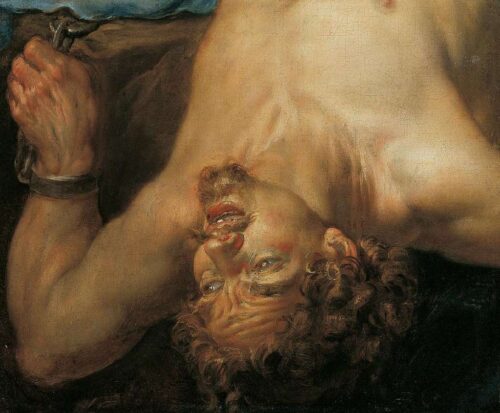
Jacques de Lange (Prometheus, 1640, detail)
Reemtsma continues….“But where does such an approach start? Sociologists who address physical violence usually factor in far broader contexts, mostly because they concentrate on its causes. Framing the question about what to look for is a (usually implicit) set of hypotheses about where to look for it. One claim I make in this book is that an emphasis on cause is part of modernity’s problem with violence. I would thus like to bracket the issue of causation from the outset, putting aside questions of motive, intention, and mental disposition. In certain cases it may be useful to regard an act of violence as a means to an end, as an expression of a mental state, or as a characteristic of a specific group, and at times, I will also speak of violence as “instrumental.” ”
Jan Phillipp Reemtsma (Ibid)
Ah, now the Prisoner’s Dilemma re-enters. For it occurs to me that such game theory is bourgeois in its conception. The search for causes, per se, is a liberal alibi. Aeschylus wrote about suffering. Adorno is right that all art is a transcription of human suffering. Aeschylus’ tragedy Prometheus Bound is the of story of ‘black site’ torture and about following orders. Hephaestus is the guard at Abu Graib.
“Since the late nineties, there has been a proliferation of premeditated massacres in schools, universities, workplaces, and other public spaces, mainly but not only in the United States; attacks labeled as “jihadist” without fitting into the traditional categories of politics and religion; unmotivated attacks, even murders—often as a result of a “sidelong glance”—in public places; ferocious attacks on immigrants, marginalized people, or homosexuals. { } and the torture and murders committed by upper class youth with the sole aim of experiencing an “exciting thrill.” Even the revolts in the poor suburbs of major French, English, and North American cities have increasingly lost their political character and are sometimes reduced to mere outbursts of rage. Despite their obvious differences, and the unfathomable element of any individual act, a certain “family resemblance” emerges from these actions that goes beyond classification and statistics. Their increase, but especially their specific features, call for particular attention. We will attempt to explain them here, at least in part, by the general crisis of the subject-form, which corresponds to the crisis of the value-form and leads to a real “death drive,” where destruction and self-destruction coexist. The suicidal tendencies of globalized capitalism have their counterpart in the suicidal tendencies of many individuals, whether latent or declared. In other words, the irrationality of capitalism corresponds to the irrationality of its subjects. This phenomenon expresses all too well the decline of the subject-form and the becoming-visible of its hidden essence, which has existed since its origins.”
Anselm Jappe (The Self Devouring Society)
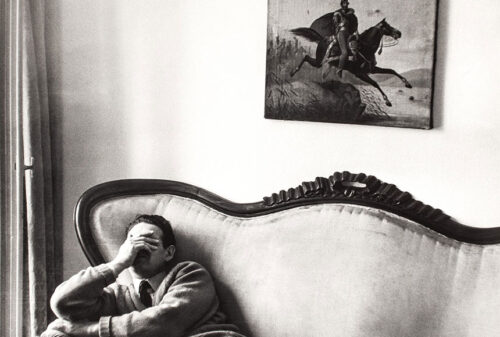
Bogdan Lopienski, photography.
Jappe notes that Freud’s idea of a ‘death drive’ was largely avoided by most mainstream psychologists and philosophers. And psychoanalysts. Only Marcuse accepted it and wrote extensively on it. Well, and a very few others.
“The death drive is therefore linked to narcissism, although Freud does not place much emphasis on this connection. On the other hand, the life drive pushes the death drive outwards to avoid the self-destruction of the living organism. It is then transformed into aggression and is much easier to observe. The requirements of life in society—which Freud calls “culture”—finally oblige the individual to renounce the integral practice of this outward discharge onto the external world and to direct part of its aggression towards itself. But human beings, Freud assures us, accept this restriction of their aggression with reluctance, which ends up constituting the basis of war and other violence.”
Anselm Jappe (Ibid)
And here is a footnote Jappe includes in this chapter, and it helps tie this all into Wittgenstein and to game theory, in a sense, too.
“An extreme form of lack of empathy has been identified in “alexithymia,” the inability to recognize and express feelings. This symptom is similar to autism— and it is known that cases of autism have at least tripled in recent decades. Even if one cannot ignore that this increase is partly due to enlarged diagnostic criteria, and as far as the genesis of autism remains bitterly debated, one cannot but notice this coincidence between the rise of autism and the anthropological mutations induced by the total submission of life to commodity value and by the invasion of technologies.”
Anselm Jappe (Ibid)

Abu Graib prison, Baghdad. 2016
“According to Michel Foucault, the “disciplinary society” that emerged with the Enlightenment designates a society governed by a form of power based on an increasing internalization of social constraints. This form of power was the response to a particular problem: “How to make men work willingly and to allow the products of their labor be appropriated from them without protest?” It was through the formation of the superego, which created an active identification of subjects with the state and the economy, that this problem found resolution. Traditional education was often brutal, and what human beings had to repress in pain and fear was projected onto others in order to rid themselves of it, to objectify and hate it. These forms of education aimed at subjecting the rhythms and needs of children to a rigid organization, generally through physical punishment and humiliation. The child reacted by developing a “shell,” preventing them from feeling their own body and emotions as well as those of others. This produced, says Eisenberg, { Götz Eisenberg} the insensitivity necessary to face competition in bourgeois society and to kill without hesitation in modern warfare.”
Anselm Jappe (Ibid)
(its a shame almost nothing of Götz Eisenberg has been translated). Anyway, this is the authoritarian educational ‘system’ –Alice Miller’s ‘poisonous pedagogy’. There was a turn, as Jappe notes, in the late Sixties (all that LSD) that sought to mediate the authoritarian aspects of education. But in its place was another form of authoritarianism — indifference. Indifference masquarading as tolerance. The right wing is right about this, because this leads to the gold ribbon for competing, for a sort of abandonment of the child, a child not ready to self regulate.
Jappe adds : ““Behind the alleged tolerance of today’s educational system, children are often left to fend for themselves and to their electronic devices.”
This marked the transition to electronic parenting. And smart refrigerators, game theory and moon hoaxes. A culture of distraction, but what came along with these distractions were deeper repressions, and a huge increase in social paralysis.

Lee Ufan
“…they have been robbed of the essential: they thus grow up as psychically frigid human beings not knowing who to blame for their nameless unhappiness or where they can direct their accumulated rage. Hatred and widespread narcissistic malaise are not today, in general, the consequence of failed object relations, nor of wounds inflicted by severe parents, but of a human and educational nirvana that is also found, and perhaps especially, among the middle classes. { } Neglected education and loneliness in front of screens can result in a hatred without subject and object, totally ‘pure,’ generating a blind and free-floating violence, a ‘purposeless’ criminality that remains an enigma for its victims, the police, the justice system, and criminal psychologists.”
“Götz Eisenberg (Die Innenseite der Globalisierung,” Aus Politik und Zeitgeschichte)
But who built those screens? With what purpose? And what exactly is *on* those screens? The answer is the instrumental and vapid repetitions of marketing and propaganda. Quite literally. Wittgenstein would ask, at every sentence, wait…what does that mean? What does that word mean here? And this is because, again quite literally, most of what is on screen is meaningless. At some point in the evolution of capitalism a point was reached in which the possessors of the means of production, the ruling class, lost their grip on all things meta. Primarely the meta narrative. Zionists experienced this in a minor key. The screens today then are both controlled and not controlled by this same ruling class. A new ruling class themselves raised in indifference and by screens. Think Peter Thiel, Alex Karp, or Sam Altman. But also Elon Musk and Jared Kushner. Fascist and mostly queer, with multiple connections to the old apartheid South Africa. These are the new avatars of tech-Fascism. And all are prone to outward projections of violence, of a object free but silent rage. It is couched in revanchist religiosity, in high tech science fiction cartoons, or in a regressive robber baron fantasy ideal.
“Apart from the historical reasons for the link between violence and masculinity, contemporary male violence is also a consequence of attempts to combat the fear of the devouring symbiosis with the archaic maternal figure—a fear reinforced by the disappearance of father figures in the family and society—and to safeguard a form of “self.” Whoever has to prematurely renounce the promises of happiness received in early childhood easily enters the gravitational pull of the “death drive.” It is therefore, above all, contact with women that arouses fear and hatred—behind which lies hatred of the mother, who has been unable to continue her work of benevolence and protection of the child from the “masculine” reality principle.”
Anselm Jappe (Ibid)

Apartheid South Africa, 1980s.
Jappe is channeling Eisenberg here, but also Theweleit (who Eisenberg footnotes in the German). There is an interesting sidebar Jappe mentions, that in the DSM psychiatric manual of this year, *mourning* after the death of a loved one, is seen as unhealthy if it continues more than two weeks (!). In the 1994 DSM that time frame was two months. In the 1980 DSM the duration was a year. Today, anything over a week is cause for medication.
I said somewhere, a bit flippantly, that we (the West) have gone from the age of schizophrenia, to the age of autism, which is being gradually replaced by the age of dementia. This is reflected in Hollywood most acutely. But alongside dementia is the sub-phylum of the borderline personality. And perhaps that has been there all along, but undiagnosed.
“ Like Eisenberg, Berardi identifies the major effects of children glued to their screens: “The fact that human beings learn more vocabulary from a machine than from their mothers is undeniably leading to the development of a new kind of sensibility. The new forms of mass psychopathology of our time cannot be investigated without due consideration of the effects of this new environment, in particular the new process of language learning. Two main developments demand consideration: the first is the dissociation of language learning from the bodily affective experience; the second is the virtualization of the experience of the other.” As he continues: “There is much evidence to suggest that this mutation in the experience of communication is producing a pathology in the sphere of empathy (an autistic trend) and in the sphere of sensibility (desensitization to the presence of the other). And this mutation of the psychic and linguistic interaction may also be at the root of the contemporary precariousness of life.”
Anselm Jaffe (Ibid, quoting Franco Beradi, Heroes, Mass Murder and Suicide 2015)
Learnning of vocabulary from screens and not parents. For both parents are now too busy with screens to talk.

Sophia Kim
Already observed back in 1964 —
“When the real world changes into simple images, simple images become real beings and effective motivations of a hypnotic behavior. The spectacle as a tendency to make one see the world by means of various specialized mediations (it can no longer be grasped directly)…”
Guy Debord.
Jappe quotes Hans Magnus Enzenberger…“that contemporary civil wars “are about nothing.” Because language is, increasingly, about nothing. Culture is, increasingly, about nothing. And the U.S. today in its denial of its own material poverty and certainly its intellectual poverty, wallows in nothingness. So, we go to the moon and find nothing there, too.

Speak Your Mind